Cities worldwide are undergoing dramatic transformations through smart technology integration, with urban furniture becoming the critical physical interface between citizens and digital infrastructure. These intelligent street elements—ranging from transit shelters to information kiosks—are revolutionizing how people experience urban environments while advancing sustainability goals and operational efficiencies for municipalities.
According to the United Nations, 68% of the global population will live in urban areas by 2050, creating unprecedented challenges in mobility, resource management, and public services. Smart urban furniture offers tangible solutions to these challenges by embedding digital capabilities into everyday street elements, creating more responsive, efficient, and people-centered public spaces.
The global smart city market is projected to reach $2.5 trillion by 2026, with smart infrastructure representing a significant portion of this investment. Forward-thinking cities are recognizing that intelligent street furniture serves as the foundation for broader smart city initiatives—providing both immediate benefits to citizens and valuable data insights for urban planners and municipal authorities.
The Technological Evolution of Urban Street Elements
Traditional urban furniture has transformed dramatically from purely functional objects to sophisticated digital touchpoints within connected city ecosystems. This evolution represents a fundamental shift in how cities approach public infrastructure design and deployment.
From Functional Objects to Digital Touchpoints
The journey from conventional to intelligent street elements has accelerated in recent years:
First-generation street furniture focused exclusively on utilitarian needs
Second-generation designs incorporated aesthetic considerations and improved materials
Current implementations integrate sensors, connectivity, renewable energy, and interactive interfaces
Next-generation solutions will feature predictive capabilities, personalization, and seamless integration with autonomous systems
This progression reflects broader technological trends but also changing expectations about urban experiences. Modern citizens expect the same digital conveniences in public spaces that they enjoy in their homes and workplaces.
Key Drivers Accelerating Adoption
Several factors are pushing cities toward smarter urban furniture implementations:
Increasing demands for operational efficiency amid budget constraints
Rising citizen expectations for digital services and amenities
Sustainability mandates requiring reduced energy consumption and carbon footprints
Public safety concerns needing improved monitoring and communication systems
Competition between cities to attract residents, businesses, and visitors
Growing recognition of data's value in urban planning and management
Technology maturation making implementations more affordable and reliable
These drivers create compelling cases for investment, with early adopters demonstrating measurable benefits across multiple dimensions of urban life.
Transforming Transit Experiences Through Smart Bus Shelters
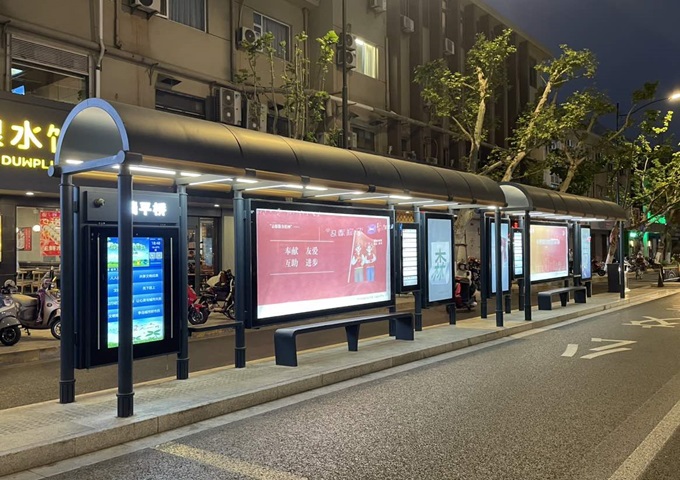
Smart bus shelters represent one of the most transformative applications of intelligent urban furniture, fundamentally changing how citizens experience public transportation while generating valuable insights for transit authorities.
Core Technologies Enhancing Transit Infrastructure
Modern interactive smart bus shelters combine multiple technologies into cohesive passenger-focused systems:
High-definition digital displays presenting real-time arrival information
Interactive touchscreens offering route planning and local wayfinding
Environmental sensors monitoring air quality, temperature, and noise levels
Video analytics systems tracking occupancy while preserving privacy
Solar panels providing renewable power for digital components
Energy-efficient LED lighting enhancing visibility and safety
Connectivity infrastructure offering public WiFi and device charging
Accessibility features ensuring universal usability regardless of ability
Weather-resistant materials withstanding extreme conditions
Modular components allowing easy maintenance and upgrades
These technological elements work together to create transit waiting environments that feel safe, comfortable, and connected. The most effective implementations balance technological sophistication with intuitive usability, ensuring benefits are accessible to all citizens regardless of technical literacy.
Quantifiable Benefits for Passengers and Municipalities
Research confirms that smart transit infrastructure delivers measurable improvements:
For transit users:
Real-time information reduces perceived wait times by 30-35%
Digital route planning increases journey confidence and reduces stress
Weather protection and climate control enhance physical comfort
Enhanced lighting and monitoring improve safety perceptions by 40%
WiFi access transforms "wasted" waiting time into productive moments
For transit authorities and municipalities:
Passenger counting provides precise utilization data for service optimization
Digital advertising generates $15,000-$30,000 annually per shelter
Remote monitoring reduces maintenance costs by 15-25%
Improved passenger experience increases ridership by 2-8%
Environmental sensors create valuable urban air quality mapping
These benefits create positive feedback loops, where improved experiences lead to increased ridership, generating both environmental benefits and additional fare revenue that can fund further improvements.
Comprehensive Smart Urban Infrastructure Systems
While smart bus shelters often serve as flagship implementations, they function most effectively as part of integrated smart city furniture ecosystems. A holistic approach incorporates multiple complementary elements working together to enhance urban experiences across contexts.
Essential Components of Connected Urban Landscapes
A complete smart city furniture ecosystem typically includes several key elements:
Advanced Bus Stop Digital Signage
Bus stop digital signage provides critical real-time information at transit points, ranging from simple arrival time displays to sophisticated interactive systems offering:
Live vehicle tracking with accurate arrival predictions
Service alerts and disruption information
Multi-modal transportation options and connections
Local maps and points of interest
Emergency notifications and weather updates
Accessibility features for users with visual or hearing impairments
The latest digital wayfinding kiosks integrate with mobile applications, allowing journey planning to begin before reaching the physical kiosk and continue on personal devices after leaving.
Energy-Independent Street Furniture
Solar bench installations represent perfect examples of sustainable urban furniture with digital capabilities. These self-sufficient elements typically feature:
Photovoltaic panels generating clean, renewable energy
Battery storage systems ensuring 24/7 operation
USB and wireless charging capabilities for public devices
Energy-efficient LED illumination for nighttime safety
Optional environmental monitoring sensors
Durable, low-maintenance construction
Universal design principles ensuring accessibility
Solar powered bus stop solutions extend this approach to transit infrastructure, creating energy-independent information points that function even during power outages.
Multifunctional Service Points
Urban service kiosks serve as versatile information and transaction hubs throughout city environments. These stations typically offer:
Interactive directory and wayfinding services
Municipal service access points
Emergency communication capabilities
Tourist information and event listings
Ticketing for attractions, parking, or transit
Public WiFi access and device charging
Environmental monitoring capabilities
These versatile structures serve as critical touchpoints between citizens and city services, particularly for those without smartphone access, while generating revenue through advertising and transaction fees.
Intelligent Lighting Networks
Smart street lights have evolved beyond illumination to become sophisticated infrastructure platforms. Current implementations feature:
Adaptive brightness responding to ambient conditions and motion
Energy-efficient LED technology reducing power consumption by 50-70%
Environmental and traffic monitoring sensors
Public safety features including gunshot detection and emergency buttons
Digital connectivity infrastructure supporting municipal networks
Electric vehicle charging capabilities
Visual indicators for emergency vehicle routing
When integrated with other smart furniture elements, these lighting networks create comprehensive monitoring and communication systems spanning entire urban districts.
Integration Approaches for Maximum Impact
The transformative potential of smart city furniture is fully realized when these elements operate as coordinated systems rather than isolated implementations. Effective integration approaches include:
Unified data platforms collecting and analyzing information across all elements
Consistent design language creating coherent visual identity
Standardized connectivity protocols ensuring interoperability
Centralized management systems for efficient operations
Strategic placement creating logical networks of complementary elements
Shared power and connectivity infrastructure reducing redundancy
Coordinated user interfaces providing consistent experiences
This systems-thinking approach maximizes return on investment while creating more intuitive and valuable urban experiences. Cities like Barcelona and Singapore demonstrate the power of this integrated approach, creating seamless digital-physical environments that enhance quality of life while improving operational efficiency.
Comparative Analysis of Urban Furniture Solutions
Municipal decision-makers face complex choices when selecting smart city furniture implementations. Understanding the relative advantages, limitations, and appropriate contexts for different solutions helps ensure optimal investments aligned with specific community needs.
| Feature | Smart Bus Shelters | Digital Transit Displays | Solar Benches | Urban Kiosks | Smart Street Lights |
| Primary Function | Passenger comfort and information | Transit information | Public seating and charging | Information and services | Illumination and safety |
| Initial Investment | $15,000-$50,000 | $5,000-$15,000 | $3,000-$8,000 | $10,000-$30,000 | $2,000-$5,000 per pole |
| Installation Complexity | High - requires foundation and power | Medium - requires power and data | Low - self-contained | Medium - requires foundation and power | Medium - uses existing infrastructure |
| Energy Source | Grid/solar hybrid | Grid connection | 100% solar powered | Grid connection | Grid with optional solar |
| Maintenance Requirements | Moderate - mechanical and digital | Low - primarily digital | Very low - few moving parts | Moderate - high-touch interface | Low - remote monitoring |
| Data Collection Capabilities | High - passenger counts, environment | Medium - limited sensors | Low - usage only | Very high - interactive data | Medium - environment and motion |
| Weather Resistance | Very high - primary function | Medium - requires protection | High - designed for outdoors | Medium - sensitive electronics | Very high - designed for exposure |
| Revenue Generation | High - premium advertising space | Medium - smaller display space | Low - limited display area | Very high - transactions and advertising | Low - limited display options |
| Typical Lifespan | 10-15 years | 5-7 years | 8-12 years | 6-8 years | 15-20 years |
| Best Application Context | High-traffic transit corridors | Secondary transit points | Parks, plazas, campuses | Commercial districts, tourism areas | Citywide coverage |
This analysis reveals that different solutions excel in different contexts. Weather-resistant smart bus shelters provide essential protection in challenging climates, while solar benches offer sustainable amenities in areas without easy access to power infrastructure. Urban kiosks deliver maximum functionality in high-foot-traffic areas, while smart lighting provides the most extensive coverage for connectivity and monitoring.
Implementation Success Stories and Measurable Outcomes
Examining real-world implementations provides valuable insights into best practices and potential results from smart urban furniture deployments.
Case Study: Integrated Transit Corridor
A major North American city implemented an integrated smart transit corridor featuring 32 intelligent bus shelters, 45 digital information displays, and 120 smart street lights along a 4-mile high-frequency bus route. The $3.7 million project delivered impressive results after 18 months:
24% increase in transit ridership along the corridor
92% passenger satisfaction rate (up from 61% pre-implementation)
$420,000 annual advertising revenue offsetting operational costs
62% reduction in transit-related information requests to call centers
18% decrease in minor crimes at transit waiting areas
31% energy consumption reduction compared to previous infrastructure
Key success factors included early stakeholder engagement, phased implementation allowing adjustment based on initial results, and comprehensive staff training ensuring effective system management.
Case Study: Sustainable Public Spaces Network
A European coastal city deployed a network of 75 solar benches and 18 multi-function kiosks throughout tourist areas and public plazas. This implementation focused on sustainability and visitor experience enhancement, achieving:
Creation of 150 solar-powered device charging points requiring zero grid electricity
Extended visitor dwell time in commercial districts by 37%
Collection of 1.2 million data points on space utilization informing future development
22% reduction in tourist information staffing requirements
Delivery of critical emergency information during severe weather events
Establishment of resilient communication points functioning during power outages
This implementation demonstrated the value of energy-independent furniture elements in creating more sustainable and resilient urban environments, particularly in areas vulnerable to climate-related disruptions.
Environmental and Sustainability Dimensions
Smart city furniture makes significant contributions to urban sustainability goals through multiple direct and indirect mechanisms.
Direct Environmental Benefits
Smart urban furniture delivers several immediate environmental advantages:
Solar-powered elements reduce grid electricity demand and associated emissions
LED lighting reduces energy consumption by 50-70% compared to traditional technologies
Remote monitoring reduces maintenance-related vehicle trips and emissions
Digital displays eliminate paper waste from traditional signage and posters
Weather protection at transit stops encourages public transportation use
Sensor networks enable more efficient resource management across city operations
Durable construction extends replacement cycles, reducing manufacturing impacts
These direct benefits contribute meaningfully to municipal climate action goals while demonstrating visible commitment to sustainability.
Encouraging Sustainable Citizen Behaviors
Beyond direct impacts, smart street furniture promotes more sustainable behaviors:
Real-time transit information makes public transportation more attractive and convenient
Enhanced comfort at transit stops increases willingness to choose mass transit
Digital wayfinding encourages walking by making pedestrian navigation simpler
Environmental displays raise awareness of local conditions and climate impacts
Interactive elements can promote sustainable choices through information and incentives
Electric vehicle charging infrastructure supports transition from fossil fuel vehicles
These behavioral influences can multiply the direct environmental benefits by shifting broader patterns of resource use throughout the city. Research indicates that high-quality transit information can increase public transportation usage by 5-8%, creating significant emissions reductions in automobile-dependent communities.
Future Innovations and Emerging Possibilities
The field of smart urban furniture continues evolving rapidly, with several emerging trends likely to shape future implementations and capabilities.
Next-Generation Technologies
Tomorrow's smart city furniture will incorporate several advancing technologies:
Artificial intelligence for predictive maintenance and personalized services
Edge computing enabling faster response times and reduced bandwidth requirements
Advanced materials improving durability while reducing environmental footprint
Expanded sensing capabilities detecting air pollutants, noise, and infrastructure conditions
Augmented reality interfaces providing location-specific information overlays
Vehicle-to-infrastructure communication supporting autonomous transportation
Adaptive elements responding automatically to changing conditions and needs
These technologies will enable urban furniture to deliver more responsive, personalized experiences while generating richer data for urban planning and management.
Addressing Implementation Challenges
Despite promising benefits, several challenges must be addressed for successful widespread adoption:
Initial cost barriers, particularly for smaller municipalities with limited budgets
Integration complexities with legacy city systems and infrastructure
Cybersecurity concerns as street elements become potential network access points
Digital equity considerations ensuring benefits reach all neighborhoods and demographics
Maintenance requirements for increasingly sophisticated technical components
Managing product lifecycles to prevent obsolescence of digital elements
Balancing standardization with customization to reflect community identity
Innovative approaches addressing these challenges include public-private partnerships reducing upfront costs, modular designs allowing component-level updates, and community co-design processes ensuring implementations reflect local priorities and needs.
Frequently Asked Questions About Smart City Furniture
Q1: What are smart city technologies for sustainable urban development?
A1: Smart city technologies for sustainable development include connected infrastructure with environmental sensors, energy-efficient systems like LED lighting and solar power, intelligent transportation networks reducing congestion and emissions, digital platforms optimizing resource usage, and data analytics enabling evidence-based planning for reduced environmental impacts.
Q2: How smart building and smart cities help in sustainable development?
A2: Smart buildings and cities advance sustainable development by optimizing resource consumption through automated efficiency systems, enabling renewable energy integration, reducing transportation emissions via improved mobility options, minimizing waste through sensor-based collection, creating resilient infrastructure adapting to climate impacts, and providing data for continuous improvement in environmental performance.
Q3: What is the smart cities sustainable solution?
A3: Smart cities sustainable solution is a comprehensive approach integrating digital technology with urban infrastructure to optimize resource use, reduce environmental impacts, enhance resilience to climate change, improve quality of life, and ensure long-term economic viability—all while collecting data that enables continuous improvement through evidence-based decision making.
Q4: What are the 7 pillars of smart city?
A4: The 7 pillars of smart city development are: (1) smart governance with digital citizen engagement, (2) smart economy supporting innovation and entrepreneurship, (3) smart mobility optimizing transportation systems, (4) smart environment monitoring and protecting natural resources, (5) smart living enhancing quality of life, (6) smart people developing human capital, and (7) smart infrastructure connecting physical and digital systems.
Q5: How do smart bus shelters improve public transportation experience?
A5: Smart bus shelters improve public transportation by providing real-time arrival information reducing uncertainty, weather protection enhancing comfort, digital route planning simplifying journeys, enhanced lighting and monitoring increasing safety, connectivity options making wait time productive, accessibility features serving all users, and creating an overall modern transit experience that attracts riders.
Q6: What is the ROI of investing in smart city furniture?
A6: ROI for smart city furniture comes through multiple channels: advertising revenue ($15,000-$30,000 annually per digital display), operational savings from remote monitoring (15-25% maintenance cost reduction), increased transit ridership (2-8% typical growth), higher property values in enhanced areas, energy savings (50-70% with LED technology), and valuable data insights enabling optimization across city operations.
Q7: How are smart urban furniture solutions integrated with existing city infrastructure?
A7: Smart urban furniture integrates with existing infrastructure through IoT connectivity platforms sharing standardized data, physical design complementing established streetscapes, flexible power options including solar for locations without ready access, modular components allowing phased implementation, API-based systems integration with municipal networks, and collaborative planning processes involving multiple departments and stakeholders.
Conclusion: Creating Tomorrow's Connected Urban Environments
Smart city furniture represents the critical intersection where digital capabilities meet physical urban environments, transforming everyday street elements into platforms for connectivity, sustainability, and enhanced citizen experiences. As cities worldwide face mounting challenges from urbanization, climate change, and resource constraints, these intelligent infrastructure elements offer practical, visible solutions that improve daily life while advancing broader smart city objectives.
The most successful implementations take a holistic, ecosystem approach—deploying complementary elements that work together to create coherent, intuitive urban experiences. From weather-resistant smart bus shelters that transform transit waiting to solar benches providing sustainable charging points, these elements collectively create more livable, efficient, and sustainable urban environments.
For municipal leaders navigating the complex landscape of smart city initiatives, starting with strategic furniture implementations offers a practical entry point with visible benefits and clear returns on investment. By focusing first on high-impact areas like transit corridors and public gathering spaces, cities can demonstrate value while building the expertise and infrastructure needed for broader smart city programs.
The future of urban environments will increasingly be defined by how successfully we integrate digital intelligence into physical spaces. Smart city furniture stands at this crucial intersection, transforming everyday urban elements into the foundation for more connected, sustainable, and people-centered cities.


