Smart solar benches represent one of the most visible and practical implementations of smart city technology in urban environments. These innovative street furniture solutions combine traditional seating with renewable energy generation, digital connectivity, and environmental monitoring capabilities. As cities worldwide embrace sustainability initiatives and digital transformation, these multifunctional benches are transforming public spaces into energy-efficient hubs of connectivity and convenience.
The global market for smart city furniture is experiencing unprecedented growth, with smart solar benches leading the way as flagship products that demonstrate tangible benefits of urban innovation. According to recent industry reports, the smart urban furniture market is projected to reach $23.5 billion by 2026, growing at a CAGR of 18.4% from 2022. This rapid expansion reflects growing recognition among municipal authorities, urban planners, and property developers that intelligent street furniture offers practical solutions to multiple urban challenges while supporting sustainability goals.
As we explore the evolution, capabilities, and applications of these innovative urban elements, we'll examine how they're contributing to greener, more connected, and more sustainable urban environments across the globe.
The Evolution of Smart Solar Benches in Urban Environments
The concept of public seating has undergone a remarkable transformation in recent years, evolving from simple functional objects into sophisticated technology hubs that contribute to smart city ecosystems. This evolution reflects broader changes in urban planning philosophy, technological capabilities, and sustainability priorities.
From Traditional Seating to Intelligent Street Furniture
Traditional public benches have served a single purpose for centuries: providing a place for people to sit and rest in public spaces. While designs have varied across cultures and eras, their functionality remained largely unchanged until recently. The journey toward today's smart solar benches began with several key transitions:
First-generation improvements focused on durability and weather resistance
Early sustainable designs incorporated recycled materials
Initial solar integration provided simple lighting functions
Basic connectivity features like USB charging ports were added
Full smart functionality emerged with the integration of digital displays, sensors, and wireless connectivity
Today's smart city furniture represents a complete reimagining of what public seating can be. Modern solar powered benches serve as self-sufficient energy hubs, connectivity points, environmental monitoring stations, and data collection nodes—all while continuing to fulfill their original purpose as comfortable public seating.
Smart Solar Bench Technology Advancements for 2026
The technology powering smart solar benches continues to evolve rapidly, with several significant advancements expected to become standard by 2026:
Higher Efficiency Solar Panels: Next-generation photovoltaic technology is increasing energy harvesting efficiency by up to 30%, enabling more power generation from the same surface area.
Advanced Energy Storage: Improved battery technologies with greater capacity and longer lifecycles are enhancing energy independence and reliability.
Expanded Connectivity Options: Beyond standard WiFi and USB charging, newer models incorporate wireless charging pads, 5G small cells, and IoT connectivity hubs.
Enhanced Environmental Sensors: Sophisticated monitoring capabilities now include air quality analysis for multiple pollutants, noise level monitoring, and weather tracking.
AI-Powered Predictive Maintenance: Integrated artificial intelligence systems monitor bench performance, predict maintenance needs, and optimize energy management.
Accessibility Enhancements: Universal design improvements ensure smart benches serve all urban residents regardless of physical abilities.
These technological advancements are making smart solar benches more capable, efficient, and valuable components of urban infrastructure. Manufacturers like Zemso are at the forefront of implementing these innovations in their latest solar bench designs, creating products that anticipate the needs of tomorrow's smart cities.
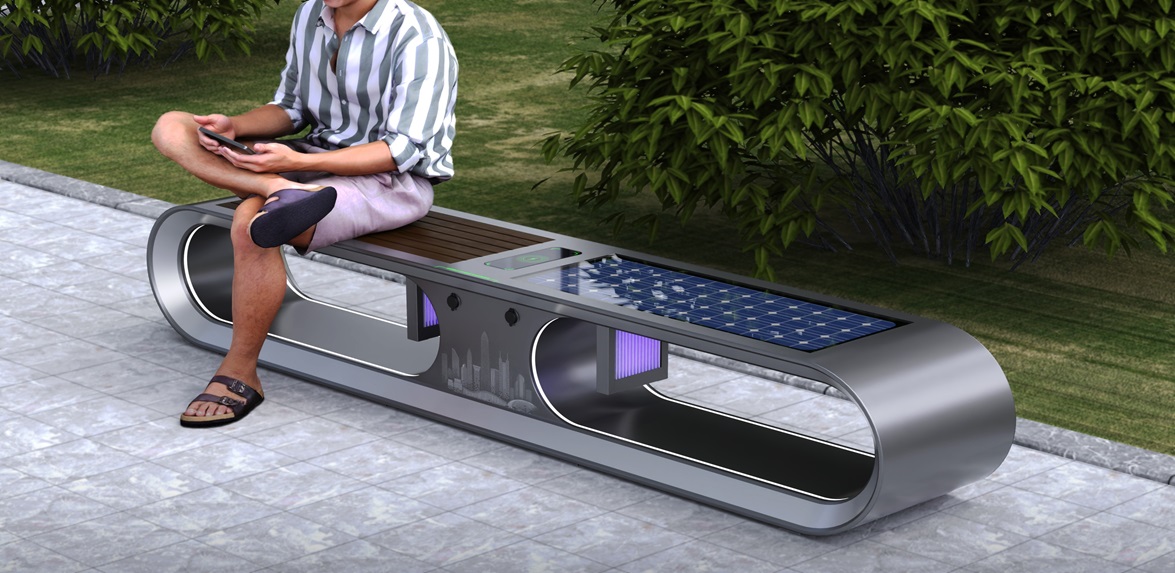
Core Features and Innovative Capabilities of Smart Solar Benches
Modern smart solar benches combine multiple technologies into integrated systems that provide numerous functions beyond traditional seating. Understanding these core capabilities helps urban planners and facility managers select appropriate solutions for their specific needs.
Renewable Energy Collection and Storage Systems
The foundation of any solar bench charging station is its ability to generate and store clean energy:
High-Efficiency Photovoltaic Panels: Modern solar benches feature optimally positioned solar panels that maximize energy collection throughout the day, typically generating 50-200 watts depending on size and configuration.
Advanced Battery Storage: Integrated battery systems store excess energy for use during nighttime or cloudy conditions, with capacities ranging from 300Wh to 1.5kWh in premium models.
Intelligent Power Management: Sophisticated control systems optimize energy harvesting, storage, and consumption based on weather conditions, usage patterns, and battery status.
Weather-Resistant Design: All electrical components are sealed and protected to ensure reliable operation in diverse environmental conditions, from heavy rain to extreme temperatures.
Grid-Independence: Most solar powered smart benches operate entirely off-grid, eliminating the need for costly electrical infrastructure and ensuring functionality even during power outages.
These renewable energy systems form the backbone of smart bench functionality, providing clean power for all digital features while demonstrating visible commitment to sustainability.
Smart Charging and Connectivity Features
Public charging capabilities represent one of the most appreciated features of modern smart benches:
Multiple USB Charging Ports: Typically featuring 2-6 USB ports supporting fast charging protocols for smartphones, tablets, and other portable devices.
Wireless Charging Pads: Many newer models incorporate Qi-standard wireless charging surfaces for compatible devices.
Public WiFi Hotspot: Integrated wireless networking provides free internet access in public spaces, extending digital inclusion.
Energy Monitoring Displays: Digital readouts showing real-time energy generation and consumption help educate the public about renewable energy.
Interactive Touchscreens: Premium models may feature weather-protected touchscreen interfaces providing local information, wayfinding, or public service announcements.
The design and implementation of smart bench integrated solar cell for public space electricity saving goes beyond mere convenience—it represents a practical demonstration of renewable energy's potential while providing genuinely useful services to citizens.
Environmental Monitoring and Data Collection Capabilities
Many smart solar benches serve as distributed environmental sensing platforms, contributing valuable data to urban management systems:
Air Quality Monitoring: Sensors measuring particulate matter, nitrogen oxides, carbon dioxide, and other pollutants provide real-time air quality data.
Ambient Noise Detection: Acoustic sensors track noise levels, helping identify and address urban noise pollution.
Weather Stations: Integrated temperature, humidity, pressure, and precipitation sensors create distributed weather monitoring networks.
Usage Analytics: Occupancy sensors and connectivity tracking provide insights into public space utilization patterns.
Emergency Alerts: Some models include panic buttons or automated emergency detection systems enhancing public safety.
The data collected through these monitoring systems provides valuable insights for urban planners and environmental managers, enabling more informed decision-making and targeted interventions to improve urban quality of life.
Global Market Analysis of Smart Solar Benches
The market for smart solar benches shows significant regional variations in adoption rates, preferred features, and implementation approaches. Understanding these differences helps manufacturers and urban planners develop appropriate strategies for different markets.
Regional Market Characteristics Comparison
Smart bench deployment varies considerably across different global regions, reflecting diverse urban priorities, climate conditions, and technological readiness:
Solar Benches in the UK and Europe
The European market, particularly the UK, leads in smart bench adoption with several distinctive characteristics:
Strong focus on environmental monitoring capabilities
Preference for integrated public transport information
Higher prioritization of aesthetic design considerations
Greater integration with existing smart city platforms
More emphasis on weather resistance due to variable climate conditions
Cities like London and Barcelona have been particularly aggressive in deploying smart benches in public spaces, parks, and transport hubs. The UK market shows particular interest in benches that support broader environmental monitoring networks.
Solar Bench Implementation in India
India represents a rapidly growing market with unique priorities:
Greater emphasis on grid independence due to power reliability challenges
Strong focus on public device charging capabilities
Higher prioritization of durability in extreme weather conditions
Increasing integration with digital government services
Growing adoption in smart city initiatives across tier 1 and tier 2 cities
Indian implementations often focus on high-traffic areas where charging capabilities provide maximum public benefit, with particular emphasis on transportation hubs and educational campuses.
Smart Urban Furniture in the USA
The American market shows distinctive characteristics:
Focus on commercial and mixed-use developments
Greater emphasis on data collection and analytics
Higher prioritization of cellular network integration
Strong interest in advertising and information display capabilities
Regional variation with faster adoption in coastal urban centers
Solar street lights USA implementations often complement solar bench deployments, creating comprehensive renewable energy zones within urban areas. University campuses and corporate headquarters have been early adopters of these technologies.
Leading Solutions and Comparative Analysis
The smart solar bench market includes several established manufacturers offering distinctive approaches:
| Feature | Basic Models | Standard Models | Premium Models | Zemso AI+Smart Models |
| Solar Panel Output | 50-80W | 100-150W | 150-200W+ | 120-180W |
| Battery Capacity | 300-500Wh | 600-900Wh | 1000-1500Wh | 800-1200Wh |
| Charging Ports | 2-4 USB | 4-6 USB | 6+ USB + Wireless | 4-8 USB + Wireless |
| WiFi Capabilities | Basic hotspot | Standard coverage | Extended range + 4G backup | Adaptive mesh networking |
| Lighting | Basic LED | Adaptive LED | Programmable RGB LED | Sensor-activated adaptive |
| Environmental Sensors | None/Limited | Temperature, Humidity | Full environmental suite | AI-enhanced predictive analytics |
| Weather Resistance | Standard | Enhanced | All-weather protection | Advanced materials + self-cleaning |
| Seating Capacity | 2-3 people | 3-4 people | 4-5 people | Modular expandable design |
| Smart Features | Minimal | Standard monitoring | Full integration | AI-powered adaptive systems |
| Typical Applications | Parks, Campuses | Urban centers, Transport | Premium public spaces | Smart city integrations |
Zemso's multifunctional and AI+Smart solar bench models offer particularly comprehensive features, with advanced environmental monitoring capabilities and modular design approaches that allow customization for different deployment contexts.
Deployment Scenarios and Applications for Smart Solar Benches
Smart benches deliver different benefits depending on where they're installed. Understanding optimal placement strategies helps maximize their impact on urban livability and sustainability.
Parks and Recreational Areas
Smart benches in parks create natural gathering points that enhance visitor experiences:
Provide convenient device charging during outdoor activities
Extend park visits by offering connectivity in natural settings
Collect valuable usage data to inform park management decisions
Serve as emergency contact points in large park areas
Demonstrate visible commitment to green technology
Create educational opportunities about renewable energy
Enhance safety through improved lighting and communication options
The implementation of smart benches in parks complements existing green space goals while adding new functionality that meets modern visitor expectations for connectivity and convenience.
Commercial Districts and Campus Environments
Business districts and educational campuses represent ideal environments for smart solar bench deployment:
Create convenient outdoor working and studying spaces
Extend connectivity beyond building interiors
Support outdoor meetings and collaboration
Provide charging options during commutes
Enhance campus sustainability metrics and green credentials
Serve as visible demonstrations of innovation and forward-thinking
Collect valuable data on space utilization and movement patterns
Commercial property managers increasingly see smart benches as amenities that enhance property values and tenant satisfaction by supporting flexible working and studying styles.
Transportation Hubs and Tourist Destinations
Strategic placement near transit stops and tourist attractions maximizes public benefit:
Provide charging options during travel wait times
Offer connectivity for checking schedules and planning routes
Support digital ticketing and transportation apps
Enhance visitor experiences at tourism sites
Create more comfortable waiting environments
Serve as easily identifiable meeting points
Provide multilingual information through digital interfaces
These high-traffic areas typically see the most intensive use of charging and connectivity features, delivering maximum public benefit from each installation.
Return on Investment and Sustainability Value Analysis
While the initial investment in smart solar furniture exceeds that of traditional benches, the long-term benefits create compelling value propositions for municipalities and property managers.
Energy Savings and Cost Benefits
Smart solar benches deliver quantifiable economic benefits:
Energy Production: A typical smart bench generates 150-300 kWh annually depending on location and solar conditions.
Grid Infrastructure Savings: Off-grid operation eliminates costly electrical infrastructure installation (typically $2,000-$5,000 per traditional connection).
Operational Independence: Solar power eliminates ongoing electricity costs (saving $50-$200 annually per installation).
Reduced Maintenance: Remote monitoring reduces physical inspection requirements by 40-60%.
Extended Lifespan: Quality smart benches typically last 10-15 years with proper maintenance, compared to 5-7 years for conventional benches.
Data Value: The environmental and usage data collected has significant value for urban planning and management.
The comprehensive return on investment typically ranges from 3-5 years when all benefits are properly quantified, with longer-term value continuing throughout the product lifecycle.
Social and Environmental Impact
Beyond direct economic benefits, smart solar benches deliver substantial social and environmental value:
Carbon Reduction: Each bench typically offsets 50-120 kg of CO2 emissions annually by replacing grid electricity with solar power.
Public Education: Interactive displays raise awareness about renewable energy and sustainability.
Digital Inclusion: Free WiFi access helps bridge the digital divide in public spaces.
Urban Resilience: Off-grid functionality maintains critical services during power outages.
Data-Driven Improvements: Environmental monitoring enables more targeted interventions to improve air quality and reduce noise pollution.
Public Space Activation: Enhanced amenities encourage greater use of public spaces, strengthening community connections.
These less tangible benefits often prove more valuable than direct economic returns, contributing to broader urban livability and sustainability goals.
Future Directions and Innovation in Smart Solar Urban Furniture
The smart solar bench sector continues to evolve rapidly, with several emerging trends likely to shape future product generations and implementations.
Emerging Technologies and Integration Possibilities
Several technological developments are expanding what's possible with smart urban furniture:
Advanced Materials: Self-cleaning, antimicrobial surfaces enhancing durability and reducing maintenance requirements.
Kinetic Energy Harvesting: Supplementary energy generation through piezoelectric elements that convert movement into electricity.
Expanded Sensor Networks: Integration of additional environmental monitoring capabilities including particulate identification and ultraviolet exposure measurement.
Autonomous Maintenance: Self-diagnosing systems with predictive maintenance algorithms minimizing downtime.
Augmented Reality Integration: Location-based information delivery through smartphone integration.
Adaptive Lighting: Intelligent illumination systems responding to ambient conditions and user presence.
Vehicle Integration: Connections with electric micromobility options like e-bikes and scooters.
These innovations point toward increasingly capable and responsive urban furniture that delivers greater value while requiring less maintenance and management.
Sustainable Design Trends and Circular Economy Approaches
The next generation of renewable energy benches for public spaces will incorporate stronger sustainability principles throughout their lifecycles:
Modular Construction: Easily replaceable components extending product lifespans and reducing waste.
Recycled Materials: Increased use of ocean plastics and other recycled content in bench construction.
Biodegradable Components: Non-technical elements designed for eventual biodegradation.
Second-Life Battery Applications: Repurposing electric vehicle batteries for bench energy storage.
End-of-Life Planning: Comprehensive recycling programs incorporated from design phase.
Carbon-Negative Manufacturing: Production processes that sequester more carbon than they emit.
These approaches align smart furniture with circular economy principles, ensuring that environmental benefits extend throughout the product lifecycle from manufacturing to eventual recycling.
FAQs About Smart Solar Benches
Q1: What are smart solar benches and how do they work?
A1: Smart solar benches are multifunctional public seating installations that combine solar panels, battery storage, and digital technologies. They generate electricity from sunlight, store it in batteries, and use this energy to power features like device charging ports, WiFi hotspots, lighting, and environmental sensors.
Q2: What are the main benefits of installing solar powered benches in urban areas?
A2: The main benefits include providing free public device charging, offering WiFi connectivity, generating clean renewable energy, collecting valuable environmental data, reducing infrastructure costs, demonstrating sustainability commitment, enhancing public space functionality, and creating more attractive urban environments.
Q3: How much energy can a typical solar bench generate and store?
A3: A typical smart solar bench generates 50-200 watts of power in full sunlight, producing 150-300 kWh annually depending on location and weather patterns. Storage capacity ranges from 300Wh in basic models to 1500Wh in premium versions, providing 1-3 days of operation without sunlight.
Q4: Where are the best locations to install smart solar benches?
A4: Optimal locations include transportation hubs, public parks, university campuses, commercial plazas, tourist attractions, outdoor shopping areas, and community centers. The best placements combine high foot traffic, good solar exposure, complementary amenities, and areas where people typically spend time waiting or resting.
Q5: How do smart solar benches contribute to sustainable urban development?
A5: They contribute by generating clean renewable energy, reducing carbon emissions, decreasing reliance on grid electricity, creating energy-independent urban infrastructure, raising public awareness about sustainability, collecting environmental data for urban planning, and demonstrating visible commitment to green technology adoption.
Q6: What is the average lifespan of a solar powered bench?
A6: Quality solar powered benches typically have a lifespan of 10-15 years for the structural components, 7-10 years for the battery systems, and 20-25 years for the solar panels. Regular maintenance can extend overall functional lifespan, with modular designs allowing component replacement rather than complete bench replacement.
Q7: How do solar benches in the UK differ from those in the US or India?
A7: UK solar benches typically emphasize weather resistance, environmental monitoring, and aesthetic integration with historic settings. US models often focus on data collection, advertising capabilities, and campus applications. Indian implementations prioritize durability in extreme conditions, high-capacity charging, and grid independence due to power reliability challenges.
Conclusion: Empowering Sustainable Urban Futures
Smart solar benches represent perfect embodiments of how technology and sustainability can combine to create practical solutions for modern urban challenges. By transforming simple street furniture into energy-generating, connectivity-providing, data-collecting assets, these innovative products deliver multiple benefits while enhancing public spaces.
As cities worldwide continue pursuing smart city initiatives and sustainability goals, IoT-enabled solar benches for urban environments will play increasingly important roles in creating more livable, connected, and environmentally responsible communities. Their visibility in public spaces makes them powerful demonstrations of renewable energy's practical applications, helping to normalize and promote sustainable technologies.
For urban planners, property developers, and municipal authorities, smart solar benches offer rare opportunities to implement solutions that simultaneously address multiple objectives—enhancing public amenities, supporting digital connectivity, advancing sustainability goals, and collecting valuable environmental data. As the technology continues evolving, these benefits will only increase, making smart solar benches essential components of tomorrow's urban landscapes.
The future of our cities depends on intelligently integrating technology with sustainability. Smart solar benches exemplify this integration, turning everyday urban elements into powerful tools for creating greener, more connected, and more sustainable public spaces.


