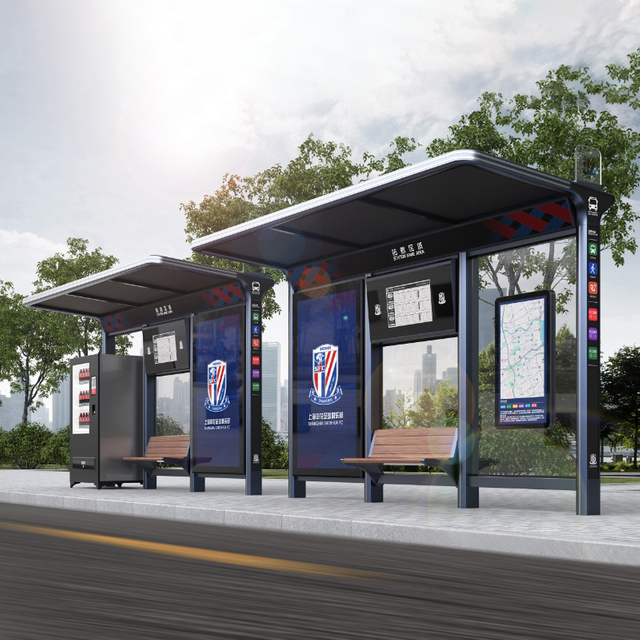
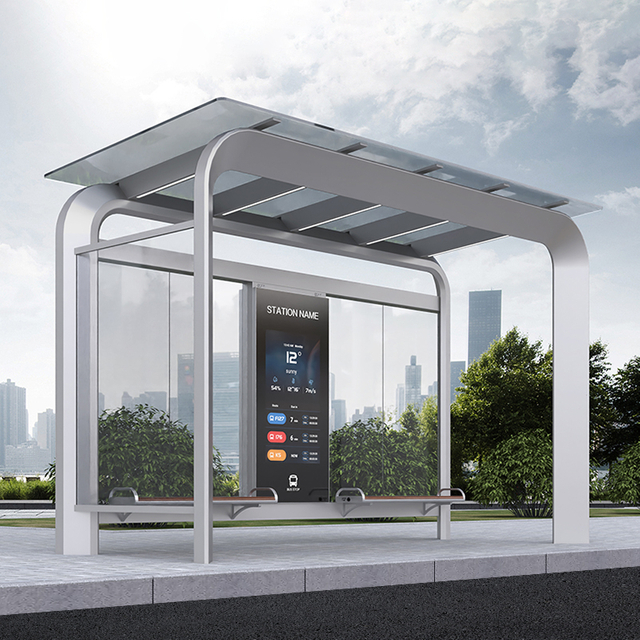
A bus stop can make public transit feel organized or uncertain before the bus even arrives. Riders notice whether the shelter is visible, lit, protected from weather, and able to give clear service information. As cities look for more flexible ways to improve transit stops, Smart Solar Bus Shelters offer a practical upgrade: solar-supported power, digital displays, lighting, seating, and connected management in one public-space structure. For city planners and transit operators, the real question is not how advanced a shelter looks, but whether it makes stops easier to use, power, and maintain.
A Better Bus Stop Starts with a Better Waiting Experience
Clear information reduces passenger uncertainty
The most frustrating part of waiting for a bus is often not the waiting itself. It is not knowing whether the bus is late, already gone, rerouted, or still on the way. Digital displays inside or beside Smart Solar Bus Shelters can reduce that uncertainty by showing arrival updates, route information, service notices, emergency messages, and city announcements. Real-time passenger information can make the waiting experience feel more predictable and help riders make better decisions at the stop.
This matters because passengers do not only need a roof over their heads. They need confidence that the stop is active and that the service is worth waiting for. A simple sign may identify the stop, but a connected display can tell people what is happening now. For commuters, students, older passengers, tourists, and people without a transit app open on their phone, that difference can be significant.
Lighting changes how safe the stop feels
Lighting is another feature that changes the way a bus stop feels. LED lighting helps passengers see the waiting area, read route information, identify the approaching bus, and remain visible to drivers and pedestrians. Strong shelter lighting also improves comfort and visibility, especially in locations where passengers wait during darker hours.
The strongest need appears in early-morning service, evening routes, rainy conditions, and low-visibility streets. A well-lit shelter can make the stop easier to recognize from a distance and more comfortable to use after dark. Lighting alone does not solve every safety concern, because site layout, traffic conditions, maintenance, and surrounding activity also matter. Still, lighting is one of the most noticeable improvements a city can add to a waiting area.
Comfort features should support real waiting behavior
Comfort does not mean adding every possible feature. Good shelter design starts with how people actually wait. Passengers need shade, rain protection, seating where appropriate, clear stop identity, charging access in higher-use areas, and enough open space for wheelchairs, strollers, and pedestrian movement.
A smart shelter should never become so crowded with screens, panels, and equipment that it blocks the sidewalk or feels difficult to maintain. The best Smart Solar Bus Shelters balance technology with simple usability.
Solar Power Makes Sense When the Site Really Needs It
Where solar support brings the most value
Solar power should be treated as a practical infrastructure choice, not a decorative sustainability label. It brings the most value where grid connection is expensive, slow, disruptive, or unavailable. Some stops sit on roads where trenching would disturb pavements, landscaping, or underground utilities. Others are located in suburban corridors, parks, campuses, tourist areas, industrial zones, or BRT extensions where adding a full electrical connection may delay the project.
In these settings, Smart Solar Bus Shelters can support lighting, displays, sensors, and low-voltage systems depending on the design. Solar does not remove the need for careful engineering, but it can help cities upgrade more stops with less dependence on traditional electrical work. For transit infrastructure, this can be especially useful when agencies want to improve stop visibility and passenger information without building a full grid-connected system at every location.
The energy design must match the actual load
A solar shelter only works well when the energy system matches the actual operating demand. Designers need to consider sunlight exposure, panel angle, shading from buildings or trees, battery capacity, display brightness, lighting hours, seasonal climate, and maintenance access. A stop with a small LED display and night lighting will not have the same demand as a shelter with multiple screens, interactive functions, and continuous communication modules.
ZEMSO-HCT-0120 includes an optional solar system and supports both AC110V–240V and DC 12V/24V power supply options, allowing different configurations for different project conditions. That flexibility is useful because not every site needs to be fully solar-powered. Some projects may use solar as the main power source, while others may use grid power, hybrid power, or solar support for specific functions. The key is to specify the shelter around real operating needs, not simply because “solar” sounds modern.
The Smart Layer Behind the Shelter: Control, Data, and Interaction
Remote control keeps equipment easier to manage
Once a bus shelter includes lighting, displays, sensors, interactive screens, and networked modules, maintenance becomes more complex. Operators need to know whether the screen is working, whether the lighting schedule is correct, whether a device has failed, and whether software needs updating. A smart shelter that cannot be monitored easily may become expensive to maintain, even if it looks impressive when first installed.
Remote control helps solve this issue. Through centralized management, operators can update content, check equipment status, adjust system settings, and respond to faults without sending staff to every location first. ZEMSO-HCT-0120 uses a dual-mode redundant control system that combines HC300 centralized control with distributed autonomous control of peripheral modules. The system also supports OTA remote upgrades for maintenance and system updates.
This type of design is important because public infrastructure must continue working in outdoor conditions. A single screen or lighting fault may seem small, but it directly affects passenger confidence. Smart Solar Bus Shelters should therefore be planned not only for installation, but also for long-term operation.
Passenger-facing intelligence should stay useful, not gimmicky
AI and interactive features can make a shelter more helpful, but only when they serve clear transit goals. Touchscreens can help passengers search routes, check nearby services, or understand transfer options. Voice interaction and text-to-speech can support users who prefer audio guidance or need accessibility assistance. Passenger flow statistics can help operators understand how stops are used at different times of day.
ZEMSO-HCT-0120 includes image analysis, TTS, passenger flow statistics, edge algorithms, digital human interaction, touchscreen use, and voice interaction. These features should not be used as empty “smart city” decoration. They are more convincing when connected to practical use cases: route guidance, service communication, accessibility support, crowd understanding, and emergency information.
A good rule is simple: if a smart function does not improve the passenger experience or help operators manage the system, it may not belong at that stop. Major transit hubs may justify more interactive features. A quiet neighborhood stop may only need lighting, shelter, and clear service information.
Open interfaces help the shelter stay relevant
Public transit systems change over time. Agencies may upgrade their arrival prediction systems, add emergency communication platforms, connect advertising networks, introduce environmental sensors, or integrate shelter data into a broader smart city system. A shelter that cannot connect with external hardware or software can become outdated faster than expected.
Open interfaces help avoid that problem. ZEMSO-HCT-0120 provides standardized interfaces and secure protocols for external platform and device integration. This matters for cities that want shelters to work with third-party systems instead of remaining isolated roadside equipment.
Function
Practical Purpose
Solar power
Supports lighting and digital systems where grid access is difficult
Digital display
Communicates arrivals, notices, and service changes
Remote control
Helps operators monitor and update shelter systems
Passenger flow statistics
Supports planning and service adjustment
Open interfaces
Allows future integration with city or transit platforms
Outdoor Design Is Where Smart Shelters Succeed or Fail
Materials must match real street conditions
Even the most advanced shelter is still outdoor public infrastructure. It has to deal with sunlight, rain, heat, wind, dust, pollution, repeated contact, cleaning, and possible impact or vandalism. Materials must therefore be selected for the actual street environment rather than appearance alone. Coastal roads may need stronger corrosion resistance. High-traffic downtown stops may need durable panels and easy maintenance access. Hot or rainy climates may require careful roof, drainage, and surface design.
ZEMSO-HCT-0120 offers material options including galvanized sheet, aluminum profile, 201/304 stainless steel, glass, PC board, tempered glass panels, PC or metal roof materials, and painted surfaces. These options give project teams room to match the shelter to the location. A shelter near a waterfront, for example, may need different material priorities from one installed on a campus or in a protected urban plaza.
For Smart Solar Bus Shelters, material selection also affects electronic reliability. Displays, lighting, control modules, and power components need protective housings, stable mounting, and designs that allow technicians to reach the equipment when service is required.
Customization should solve site problems, not just change appearance
Customization is valuable when it solves a real site problem. Sidewalk width, passenger volume, advertising needs, display placement, accessibility requirements, and city branding can vary widely from one stop to another. A shelter that works well on a wide boulevard may not fit a narrow sidewalk. A stop with heavy passenger demand may need more standing space rather than more decorative panels.
ZEMSO supports customization in dimensions, light box size, visual size, poster size, color, structure, materials, appearance, and intelligent system configuration. That flexibility should be used carefully. The goal is not to create a different-looking shelter for every street. The goal is to adapt the structure so it fits the site, protects passengers, supports equipment, and remains easy to maintain.
Good outdoor design also protects the city’s investment. If the shelter is difficult to clean, blocks pedestrian flow, overheats in summer, or exposes electronics to water, the “smart” features will not matter for long.
Conclusion
Smart Solar Bus Shelters represent a practical shift in how cities approach everyday transit infrastructure, focusing on usability, visibility, and operational efficiency rather than standalone technological features. By combining lighting, real-time information, solar-assisted energy, and connected management systems, these shelters help improve how passengers experience waiting time while also reducing pressure on traditional infrastructure.
For transit operators and planners, the value lies in how these systems support long-term service reliability and easier maintenance while adapting to different site conditions. Shanghai Zemso Urban Furniture Technology Co., Ltd. provides shelter solutions that integrate customizable structures, solar configurations, and intelligent control systems, helping cities improve passenger comfort and streamline operational management in public transport environments.