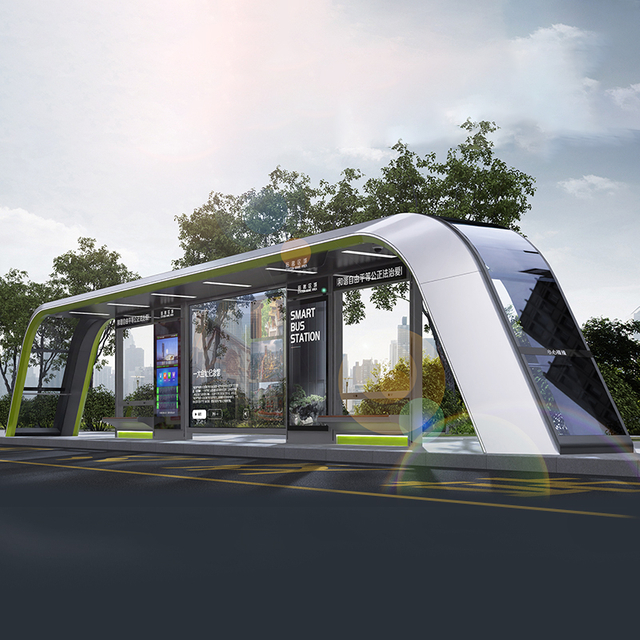
Public services often feel inefficient at the point where people actually use them: a bus stop with no clear arrival update, a station exit that confuses visitors, or a public space where notices are hard to find. Smart City Furniture Solutions address these everyday gaps by combining practical street furniture with digital information, wayfinding, charging, and service access. More than adding screens to the street, they help cities make waiting, navigation, and public communication smoother. This article explains how these solutions support better services, mobility efficiency, and smarter deployment decisions.
Smarter Waiting Areas Make Public Transport Feel More Reliable
Improve the moments before the vehicle arrives
The public transport experience starts before a passenger steps onto a bus or train. At the stop, people make quick judgments: Is this the right place? Has the route changed? Will the vehicle arrive soon? Can I wait here safely and comfortably? When these questions are not answered, the whole system feels less reliable, even if the transport network itself is operating normally.
A basic stop may provide only a sign and a curbside waiting area. That can be enough in some low-demand locations, but it often fails in places with long waits, weather exposure, poor lighting, or complicated routes. Riders may need shelter from rain or sun, seating during delays, visible route information, and a clearer sense of whether service is on schedule. A waiting area that feels exposed or uncertain can make public transport seem inconvenient before the trip even begins.
Add useful services without overcomplicating the stop
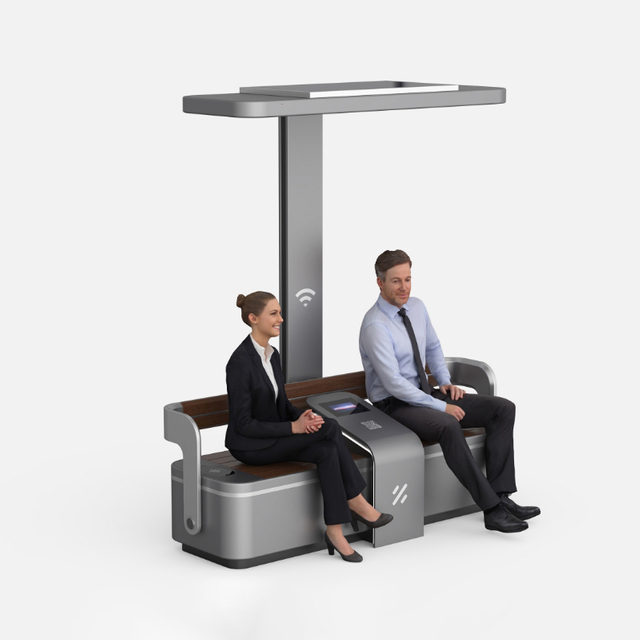
The strongest transport furniture does not add features for decoration. Each function should solve a real waiting problem. Charging access can also be useful in high-use public areas, especially when people depend on phones for tickets, maps, or emergency contact.
Well-planned bus stops usually treat shelters, seating, maps, wayfinding, and passenger information as meaningful stop-level amenities rather than visual add-ons. These details matter because the quality of the stop influences both accessibility and confidence in the service. If a passenger can wait comfortably, check the correct route, and understand whether service has changed, the stop becomes part of the service experience instead of a weak point in the journey.
For cities, this means smarter waiting areas should remain simple to understand. A stop does not need every possible screen, sensor, or charging feature. It needs the right combination of shelter, seating, visibility, information, and maintenance support for that location. When the design stays focused on passenger needs, public transport feels more predictable without becoming visually or operationally crowded.
Digital Wayfinding Helps People Move Through Cities With Less Confusion
Reduce hesitation at transfer points and busy public spaces
A city does not become easier to move through simply because buses run faster or roads are wider. People also lose time in smaller, less obvious ways: choosing the wrong exit, stopping to check a map, missing a platform sign, or turning back after walking in the wrong direction. In places such as stations, campuses, hospitals, scenic areas, shopping districts, and transport hubs, poor guidance can quickly turn into crowding and frustration. Once people are unsure where to go, movement slows down for everyone around them.
Digital wayfinding helps by putting guidance close to the point of decision. At a transfer point, a display can show which exit leads to the bus stop, taxi area, parking zone, hospital entrance, or public service building. In a park or scenic area, a digital map can direct visitors to routes, restrooms, service points, and safety areas. Along a busy street, clear destination information also reduces the need for people to stop in the walking path and search on their phones.
Keep information flexible when routes, events, or conditions change
Static signs have one major weakness: they do not adapt quickly. A road closure, station renovation, delayed service, temporary event, or emergency message can make printed guidance outdated within minutes. In those situations, the problem is not just inconvenience. Poor information can create crowding, missed transfers, and unnecessary pressure on frontline staff.
Digital signage and wayfinding displays allow public information to respond to changing conditions. Updated directions, route guidance, emergency notices, event flow instructions, and touchscreen interaction can be managed more flexibly than fixed printed signs. ZEMSO’s digital signage and wayfinding products are designed for indoor and outdoor guidance scenarios, with different display sizes and touchscreen options that can support visitor engagement in public spaces.
User Need
Static Sign
Smart Wayfinding Display
Route changes
Slow to update
Can show updated guidance
Visitor navigation
Limited fixed content
Supports interactive search
Emergency notices
Requires manual replacement
Can display urgent messages
Multi-location control
Hard to manage consistently
Easier centralized updates
A good wayfinding system should still be selective. Not every screen should show every possible message. The most useful displays prioritize the next decision a person needs to make: where to go, what has changed, how long it may take, and what action is safest or easiest. When the content is clear, digital wayfinding improves movement without overwhelming the public space.
Public Information Becomes More Accessible When It Is Placed Where People Already Are
Bring city services closer to daily movement routes
Public information is often available somewhere, but not always where people need it. A notice may be on a website, inside an office, printed on a board, or posted through a separate app. That still leaves a gap for residents and visitors who are already moving through the city and need quick guidance. Sustainable Smart City Furniture Solutions can place public information directly into streets, stops, parks, communities, and transport hubs.
This approach is useful because people do not experience public services as separate departments. A commuter may need route updates, a parent may need directions to a nearby facility, a visitor may need a local map, and a resident may need a community notice. Digital public furniture can bring these messages together in places where people naturally pause or make decisions. The result is a more visible service layer across the city.
Suitable content can include transit updates, facility directions, local maps, community notices, safety reminders, event information, and park or scenic-area guidance. The goal should not be advertising first. Public value comes from making essential information easier to find, easier to understand, and easier to act on.
Serve different user groups with clearer street-level guidance
Different users need different kinds of help from public infrastructure. Daily commuters usually want fast updates and minimal distraction. Tourists need orientation, landmark guidance, and transport connections. Elderly users may value seating, readable screens, simple wording, and enough physical space to stop without blocking others.
First-time visitors often depend on clear street-level guidance because they may not know local routes or service names. Residents may use the same furniture to check public notices, safety updates, or directions to community facilities. In each case, the best system is not the one with the most functions. The best system is the one that presents the right information in a clear visual hierarchy.
Accessibility should be treated as a design requirement, not an optional feature. Screen height, contrast, font size, viewing angle, pedestrian clearance, and interaction simplicity all influence whether people can use the system comfortably. When digital public furniture is designed for varied users, it supports mobility, inclusion, and public service access at the same time.
Deployment Should Start With Real User Need, Not Feature Lists
Choose locations where smart furniture solves a visible problem
Smart furniture should not be installed only where it looks impressive. A high-end display in the wrong location may add cost without improving public service. A simpler shelter, sign, or charging bench in the right location may deliver far more value. Deployment should begin with a visible user problem.
Strong locations often include high-ridership bus stops, transfer points, transportation hubs, hospitals, schools, government service areas, parks, scenic areas, and commercial streets with heavy pedestrian flow. These places usually have one or more clear needs: long waits, high visitor confusion, limited public information access, frequent route changes, or large numbers of people making quick movement decisions. When the location already has a mobility or service problem, Smart City Furniture Solutions can be planned around a measurable purpose.
Placement also affects equity. Public furniture should not only appear in premium districts, tourist zones, or visually prominent plazas. Neighborhoods with long waits, exposed stops, elderly residents, or limited access to service information may benefit just as much, or more.
Check comfort, accessibility, durability, and maintenance before scaling
Feature lists can be misleading. A screen may look modern, but it may fail if sunlight makes it unreadable, if pedestrians cannot move around it, or if no team is responsible for maintenance. A shelter may look attractive, but it may not improve service if it lacks useful information or does not protect passengers from local weather. Cities should evaluate the whole user experience before expanding a pilot.
Outdoor use deserves special attention. Public furniture must handle weather, frequent use, vandalism risk, cleaning needs, and changing urban conditions. Content must also remain current, because an outdated digital display can be worse than a simple static sign. If people learn that the screen is unreliable, they stop trusting it.
A practical approach is to begin with the locations where the need is easiest to define. A transport hub may need digital wayfinding and real-time updates. A bus stop with long waits may need shelter, seating, lighting, and arrival information. A park or scenic area may need maps, safety notices, and visitor guidance. Scaling should follow performance, maintenance results, and user feedback rather than the desire to add technology everywhere.
Conclusion
Smart City Furniture Solutions can make public spaces work more smoothly by improving waiting comfort, wayfinding clarity, public information access, and infrastructure management. When placed where people already move, wait, and make travel decisions, these solutions help reduce confusion and make public services easier to use. Shanghai Zemso supports this direction with smart bus shelters, digital signage, wayfinding displays, and connected urban furniture systems that help cities improve service delivery, passenger experience, and daily mobility efficiency without adding unnecessary complexity.