Cities do not become more sustainable simply by adding more devices to sidewalks, transit stops, and public spaces. The real challenge is choosing infrastructure that helps people wait more comfortably, move with clearer information, access everyday services, and reduce long-term maintenance pressure.Smart City Furniture Solutions address this need by combining familiar public facilities—such as bus shelters, seating, displays, charging points, and service kiosks—with practical digital functions. For planners, operators, and project owners, the key question is how to select furniture that improves public service, supports efficient urban operation, and fits naturally into the city environment.
Start with the Places Where Public Furniture Works Hardest
Transit stops and waiting areas
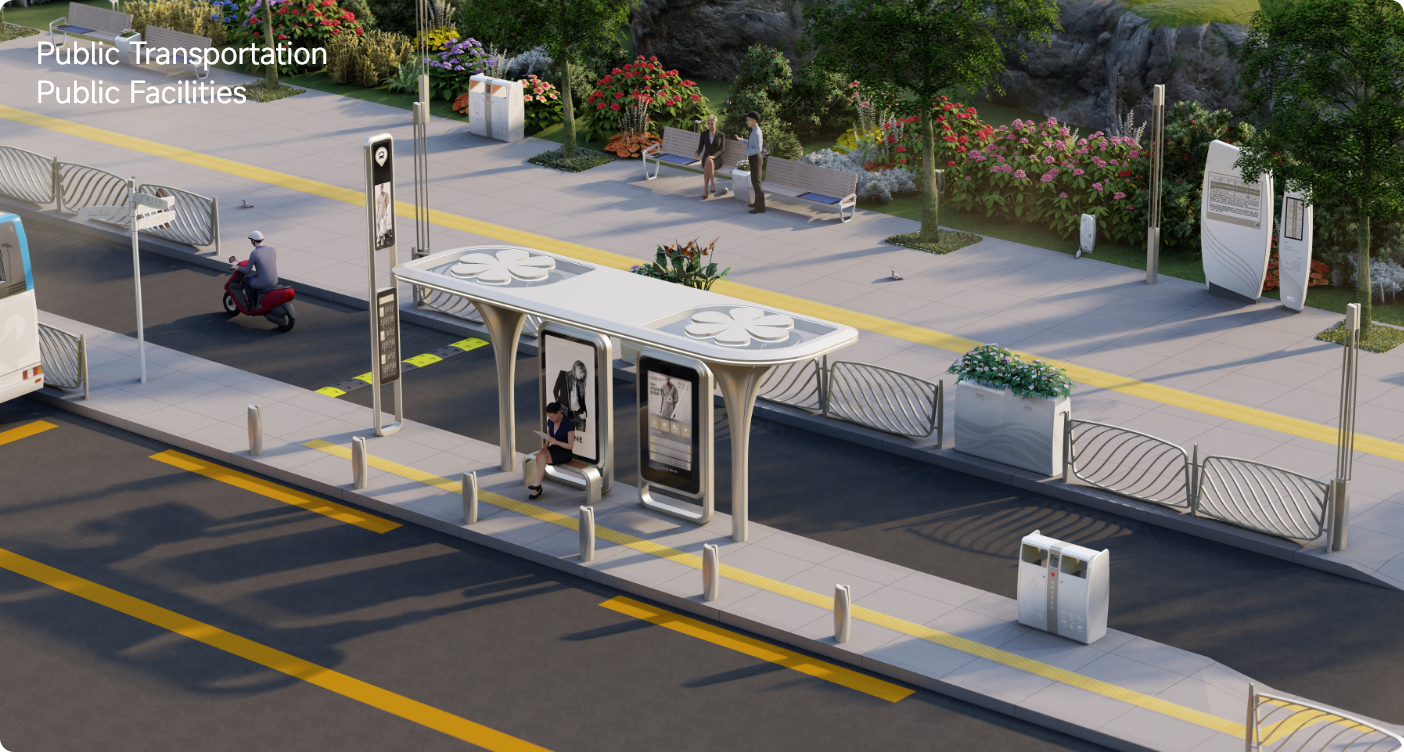
Transit stops are often the best starting point for Smart City Furniture Solutions because they concentrate many public needs in one place. A bus stop is not only a roof or a sign; it is where people check routes, wait in changing weather, look for lighting at night, and decide whether public transport feels reliable enough to use. When a waiting area lacks shade, seating, route updates, or visibility, even a short delay can feel longer and more stressful.
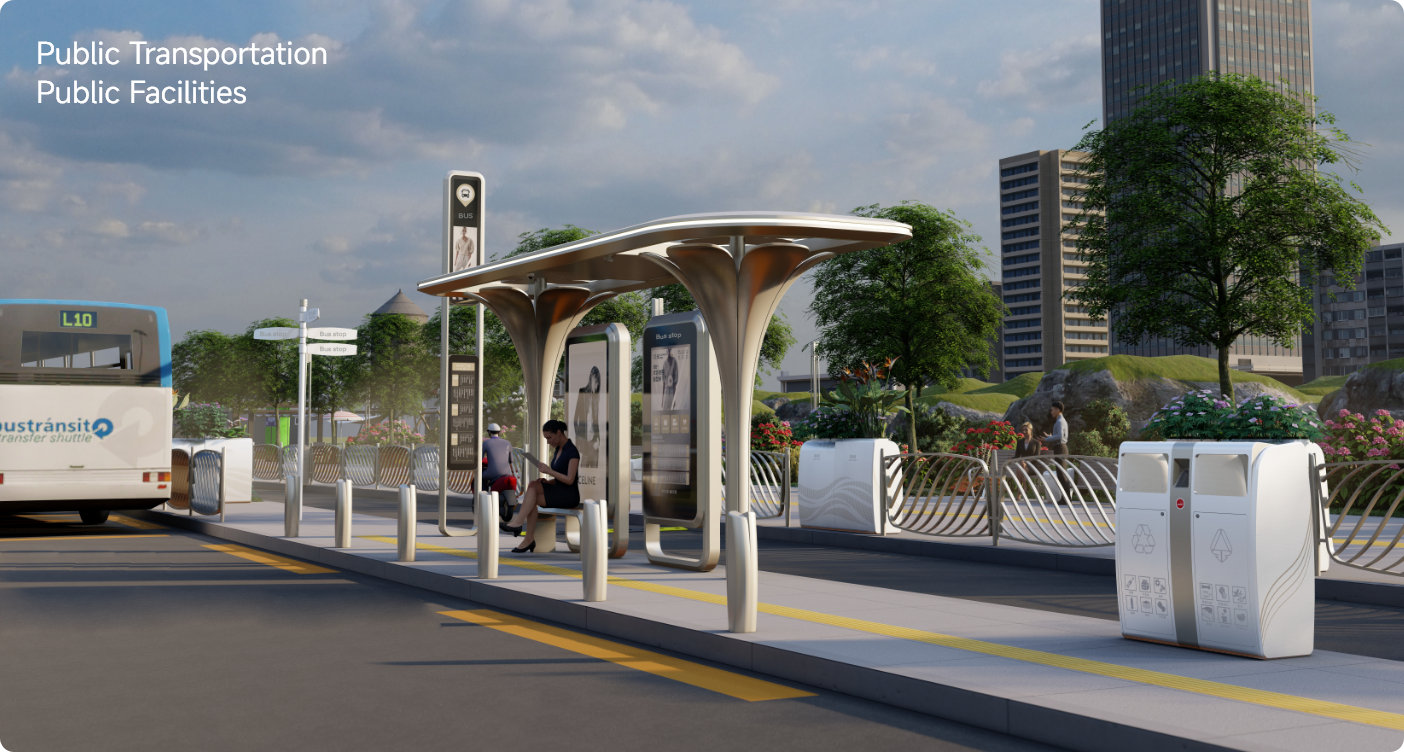
This is why smart urban furniture can create immediate value in transit corridors. A well-designed stop can provide shelter, seating, lighting, phone charging, digital route information, and clearer public announcements. These functions do not need to feel excessive; each one should answer a practical commuter problem.
ZEMSO’s public transportation scenario includes bus shelters, platforms, public seating, interactive screens, wireless charging, and real-time information displays. These facilities can also integrate city cultural elements and modern design into public transport spaces. For a city, that means a transit stop can become both a mobility service point and a recognizable part of the streetscape.
Streets, parks, hubs, and community spaces
The same logic can extend beyond bus shelters, but only when the location has a clear service purpose. Streets may need safer lighting, digital public notices, or outdoor signage. Parks and scenic areas may benefit from seating, charging access, wayfinding, and information displays that help visitors move without relying on staff support.
Transportation hubs, commercial districts, and community spaces often require a stronger mix of guidance, communication, and comfort. ZEMSO’s intelligent solutions can support public transport, scenic areas, parks, transportation hubs, commercial real estate, communities, and streets. That range shows why Smart City Furniture Solutions should be planned by location type rather than copied from one site to another.
The key is restraint. A quiet park bench does not need the same configuration as a high-traffic bus interchange. Sustainable urban infrastructure improves when each facility adds useful public value without overloading the space.
Transforming Bus Shelters Beyond Simply Providing Shelter from the Elements
Providing Real-Time Information to Reduce Uncertainty for Commuters
Bus shelters demonstrate how “smart city infrastructure solutions” can improve people’s daily commuting experiences without altering the bus routes themselves. Traditional bus shelters may offer protection from the sun and rain, but they often fail to provide passengers with real-time information about delays, route changes, or the arrival time of the next bus, leaving passengers to wait in the dark. Real-time displays, service notifications, and public announcements, however, provide passengers with the information they need while they are at the stop, rather than forcing them to wait a long time before learning the status.
For commuters, this transparency makes their journeys more manageable. When passengers can see arrival times or service updates at a glance, the uncertainty of waiting is reduced, and they no longer have to rely excessively on paper schedules, staff assistance, or mobile apps. This is particularly useful on busy thoroughfares, transit hubs, and in areas where some passengers have limited access to digital tools.
Comfort features that improve public transport adoption
Comfort has a direct impact on how people experience public transport. A bus route may be well planned, but if the waiting area feels exposed, dark, or inconvenient, passengers can still see the journey as stressful. Shade, seating, lighting, shelter coverage, phone charging, and clear stop identification all help make daily travel easier, especially for elderly passengers, students, commuters, tourists, and people carrying bags or traveling with children.
These details also shape how reliable the wider transport system feels. A clean, well-lit shelter with visible information gives passengers more confidence while they wait. It can make public transport feel more organized, accessible, and suitable for everyday use, rather than something people choose only when they have no alternative.
Commuter pain point
Smart shelter feature
Urban infrastructure value
Unclear bus arrival time
Real-time information display
Reduces waiting anxiety
Poor night visibility
Integrated lighting
Improves perceived safety
Heat, rain, or wind exposure
Shelter roof and side protection
Supports year-round use
Low phone battery during travel
USB or wireless charging
Adds everyday convenience
Confusing route changes
Digital notices and alerts
Improves public communication
The strongest shelter designs are not overloaded with every possible function. They start with the problems passengers actually face at a specific location, then add features that make waiting safer, clearer, and more comfortable. In this way, Smart City Furniture Solutions can support sustainable mobility by making public transport easier to use and more dependable in daily life.
Reduce Lifecycle Waste Through Smarter Operation
Durable design matters more than adding every feature
Long service life is one of the most practical measures of sustainable infrastructure. If a smart shelter, bench, display, or kiosk breaks down too quickly, it creates more waste, higher replacement costs, and extra pressure on maintenance teams. For cities, durability is not just a product specification; it affects the total value of the project over its full lifecycle.
Before adding advanced digital functions, project owners need to look closely at the structure itself. Public furniture may face strong sunlight, rain, snow, dust, vandalism, heavy foot traffic, and regular cleaning. Materials, surface treatment, structural stability, weather resistance, and replaceable components should all be considered early, because the technology inside the unit is only useful if the facility can keep working in real outdoor conditions.
ZEMSO’s bus shelter range includes basic, multifunctional, and AI + Smart options, which gives projects room to choose different configurations instead of applying one fixed model everywhere. Its AI-powered multifunctional bus shelter can also support customized dimensions, optional solar systems, LED lighting, and materials such as galvanized sheet, aluminum profile, and stainless steel. This flexibility matters because sustainable procurement should match the site, budget, climate, maintenance capacity, and actual service demand rather than chasing unnecessary features.
IoT-based management can lower maintenance pressure
Connected management is another reason cities consider sustainable Smart City Furniture Solutions. Without digital oversight, public furniture is often maintained reactively: something breaks, a complaint is filed, and a repair team is sent later. That approach can lead to longer downtime, higher service costs, and a poorer public experience.
IoT-based furniture management changes the workflow. Sensors and connected systems can help collect operational data, transmit it through a network layer, and support monitoring, maintenance planning, and public information services. Instead of treating each shelter or display as an isolated object, cities can manage a distributed network of public assets.
ZEMSO’s urban furniture software platform works as an IoT-based smart management system with layered architecture. It collects real-time operational data through sensors, transmits and processes data through cloud services, and supports intelligent monitoring, operation and maintenance management, and information services. For sustainable urban infrastructure, this is valuable because long-term operation often determines whether a project succeeds after installation.
A connected system can also make upgrades more manageable. The AI-powered smart multifunctional bus shelter ZEMSO-HCT-0001 includes centralized control, modular system architecture, OTA upgrades, and open API integration with third-party systems. Features like these help public furniture remain adaptable as city platforms, transport networks, and service requirements change.
Keep the Technology Useful, Accessible, and Human-Centered
Design for simple public use
Technology in public space must be easy to understand within seconds. Commuters may be rushing, elderly users may need larger text, tourists may not know local routes, and people with disabilities may need accessible interaction. A smart facility fails if it looks advanced but feels confusing.
Readable screens, intuitive wayfinding, clear lighting, logical seating positions, and uncluttered layouts should come before complicated functions. A touch screen that is hard to see in sunlight, a charging point placed in an awkward location, or a display filled with too much content can reduce usability. The same is true for shelters that prioritize digital panels but leave too little comfortable space for waiting.
Smart City Furniture Solutions should help people make faster decisions. The interface, physical structure, and surrounding space need to work together. When public furniture is designed around real movement patterns, it becomes part of daily life rather than a technology showcase.
Fit local identity instead of creating visual clutter
Public furniture also affects how a city looks and feels. A shelter, bench, display, or kiosk may be small compared with a building, but repeated across streets and transit corridors, it becomes part of the city’s visual language. Poorly matched furniture can make streets feel cluttered, while well-integrated design can strengthen local identity.
ZEMSO’s public transportation solution can integrate cultural DNA, landmark elements, historical symbols, and modern design into platforms, bus shelters, and public seating. This is useful because sustainable development is not only about energy and sensors. It also includes social and cultural fit.
Local climate should shape the design as much as local identity. Hot cities may need stronger shade and ventilation, while rainy regions may require better side coverage and drainage. Dense commercial areas may prioritize information flow, while residential communities may need quieter, safer, and more discreet facilities. A human-centered approach keeps Smart City Furniture Solutions useful without turning every public space into the same digital environment.
Plan Deployment as a Connected Infrastructure System
Choose functions based on location, not trends
The strongest projects begin with a location problem, not a product trend. A transit stop may need real-time information, seating, lighting, and shelter coverage. A transport hub may need wayfinding, public messaging, service integration, and stronger digital communication. A park or scenic area may benefit more from rest areas, charging access, environmental fit, and simple visitor guidance.
Street and community locations require a different balance. Safety lighting, public notices, accessible seating, and durable materials may be more important than interactive screens. Commercial public spaces may need higher visibility displays, but they still need to avoid overwhelming pedestrians.
Check power, connectivity, maintenance, and upgrade paths early
Power and connectivity planning should happen before large-scale deployment. Some facilities may use grid power, while others may include optional solar systems depending on climate, load demand, and installation conditions. Screen brightness, lighting hours, charging use, data transmission, and control systems all affect the power strategy.
Maintenance planning is just as important. Cleaning schedules, replacement glass, LED modules, spare parts, weatherproofing, and software support should be reviewed before a project expands across multiple locations. A pilot site may look successful at launch, but citywide deployment requires repeatable management.
Open integration also matters for long-term scalability. The AI-powered ZEMSO shelter supports open architecture, API integration, third-party connectivity, centralized control, and OTA upgrades. These features support the idea that public furniture should operate as part of a broader smart city system, not as independent objects scattered across the street.
When planned as a network, Smart City Furniture Solutions can become public service nodes. Each shelter, display, bench, or kiosk can support mobility, communication, comfort, safety, and data-enabled operation. That network mindset is what turns individual products into sustainable urban infrastructure.
Conclusion
Smart City Furniture Solutions can support sustainable urban infrastructure when they are planned around real public needs rather than added as isolated technology. From bus shelters and digital displays to seating, charging, and connected management systems, these facilities can make daily travel more comfortable, improve information access, and reduce long-term operation pressure.
Shanghai Zemso Urban Furniture Technology Co., Ltd. provides urban furniture solutions that help cities connect transit spaces, public communication, and user comfort in a more coordinated way. By choosing practical functions, durable structures, and designs that fit local environments, project owners can create public spaces that are easier to manage and more valuable for everyday urban life.