Redefining Public Transportation with Accessibility Standards
In the development of urban public spaces, accessibility has become a key indicator of public service quality. Rather than simply adding ramps or auxiliary facilities, modern accessibility emphasizes a systematic design approach—eliminating barriers in the environment, infrastructure, and information delivery. This ensures that all users can access public spaces safely and conveniently, fostering a more inclusive and equitable urban environment.
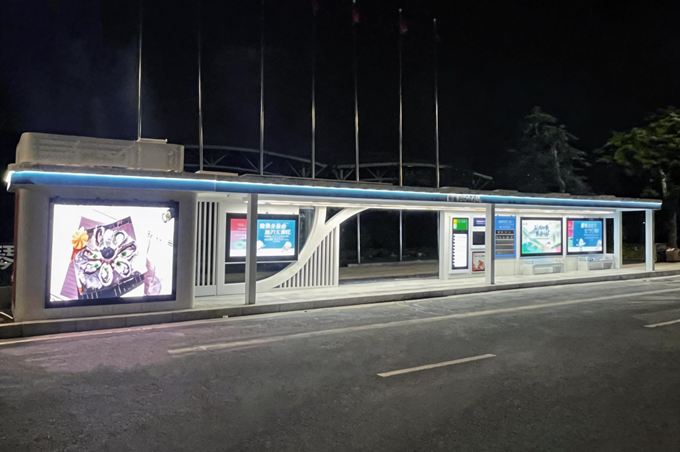
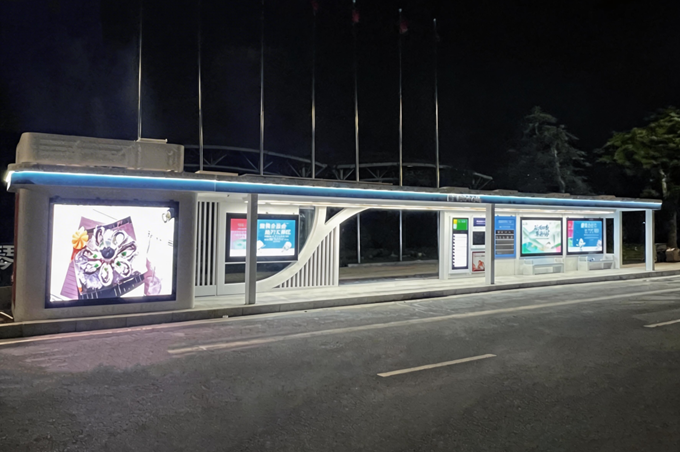
Against the backdrop of preparations for the 15th National Games, the 12th National Games for Persons with Disabilities, and the 9th Special Olympics National Games, the Hengqin Guangdong–Macao In-Depth Cooperation Zone has been advancing accessibility in urban infrastructure. A bus stop located near the Hengqin International Tennis Center has emerged as a key pilot project demonstrating the application of accessibility standards in public transportation.
The project was led by the Accessibility Technology Research Center of China Standard Design Institute, with participation from Shanghai Zemso Urban Furniture Technology Co., Ltd. Through a standardized design approach, the project optimizes spatial layout, facilities, and service systems—offering a new model for accessible public transportation infrastructure.
Redefining Bus Stops with Accessibility Standards
From the initial planning stage, the project adopted a systematic accessibility framework based on national standards such as the General Code for Accessibility in Building and Municipal Engineering. The platform layout, traffic flow, and service facilities were holistically designed and integrated.
Unlike traditional bus stops that primarily focus on waiting functions, this project prioritizes the diverse needs of different user groups. By integrating accessible mobility systems, information services, and supporting facilities, the station delivers inclusive public transport services for both daily commuting and large-scale event scenarios—setting a new benchmark for accessibility in urban transit infrastructure.
Accessible Facilities
Seamless Integration of Tactile Paving and Platform Space
The project improves connectivity between municipal tactile paving systems and the bus stop area. Tactile paths extend naturally from city sidewalks into the waiting zone, forming a continuous guidance system that links signage, waiting areas, and boarding points.
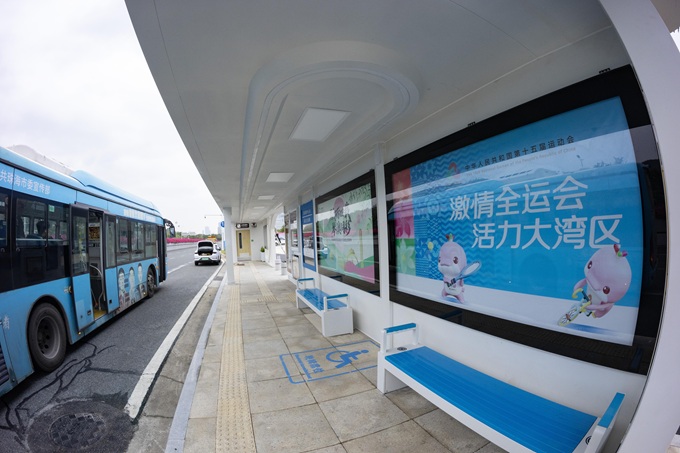
At the same time, platform height differences have been minimized to create a near-level transition between pedestrian pathways and the platform. Wheelchairs, strollers, and other mobility aids can access the station smoothly without additional ramps, enhancing both efficiency and safety.
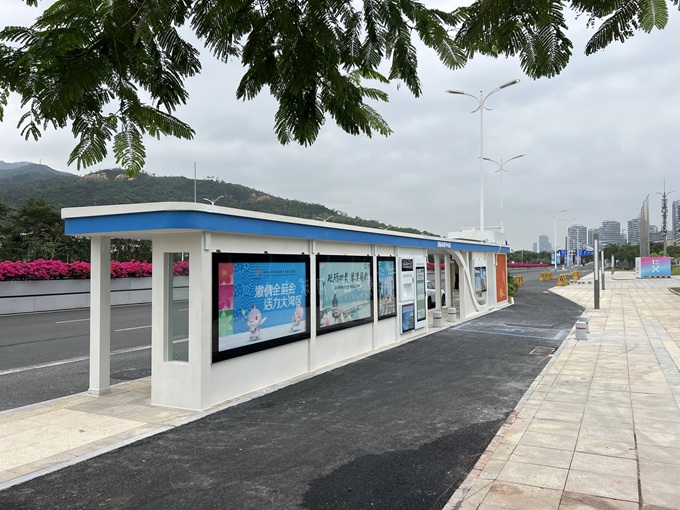
This coordinated design successfully balances the needs of visually impaired users and those with mobility challenges.
Accessible Information
Braille Signage and Voice Assistance System
To ensure inclusive information access, the bus stop integrates Braille signage with an intelligent voice announcement system.
The Braille signage adopts a horizontal layout—more aligned with tactile reading habits—improving readability for visually impaired users. It also includes a Braille map showing the layout of the bus stop and accessible restroom facilities.
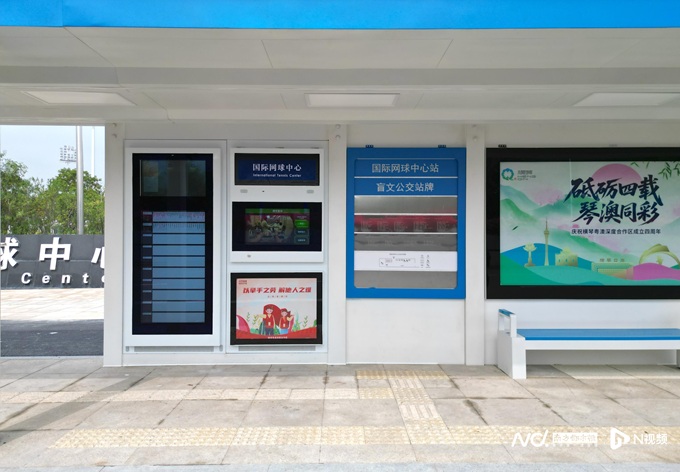
An intelligent announcement system automatically broadcasts bus arrival information, including route numbers and stop details. For reserved services, both the station and incoming bus provide synchronized voice alerts, helping visually impaired passengers board efficiently. Additionally, the system includes an accessibility reservation feature. Wheelchair users can book assistance in advance, and drivers receive notifications before arrival to provide necessary support.
Accessible Facilities
Integrated Accessible Restroom
The bus stop includes a fully accessible restroom designed with user diversity in mind. Interior design uses contrasting colors on floors and walls to improve spatial recognition for people with low vision. White sanitary fixtures and yellow grab bars create strong visual contrast for added safety.
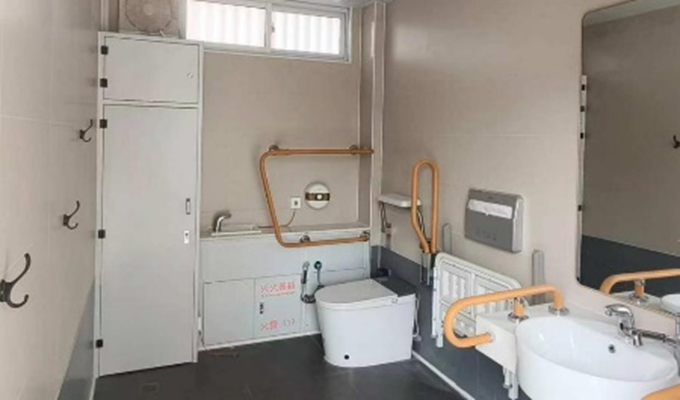
Key features include dual faucets, foldable multifunctional platforms, ergonomically positioned U-shaped grab bars, and auxiliary sinks designed for users with specific medical needs such as catheterization or ostomy care. The lighting system uses motion sensors, balancing safety with energy efficiency.
Modular Construction
Improving Efficiency and Quality
The project adopts a prefabricated construction approach. The main structure is manufactured in a factory, where screens, sensors, and wiring systems are pre-installed and tested. On-site work is limited to lifting and power connection, enabling rapid deployment.
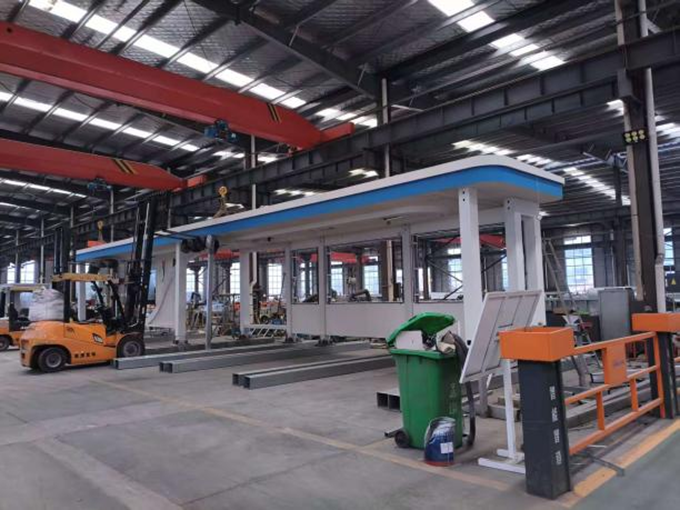
This method significantly improves construction efficiency, reduces on-site disruption to surrounding traffic, and enhances overall installation precision and quality.As urban furniture service systems continue to evolve, accessibility is shifting from isolated facility upgrades to systematic and standardized development. The Hengqin bus stop project demonstrates how standardized design and modular construction can work together to advance accessible public transportation.
As a project participant, Shanghai Zemso Urban Furniture Technology Co., Ltd. contributed to design optimization and technical implementation, helping bring these concepts into real-world application. Moving forward, ZEMSO will continue to leverage its expertise in smart public transportation infrastructure to support the development of more inclusive, efficient, and safe urban mobility environments.


